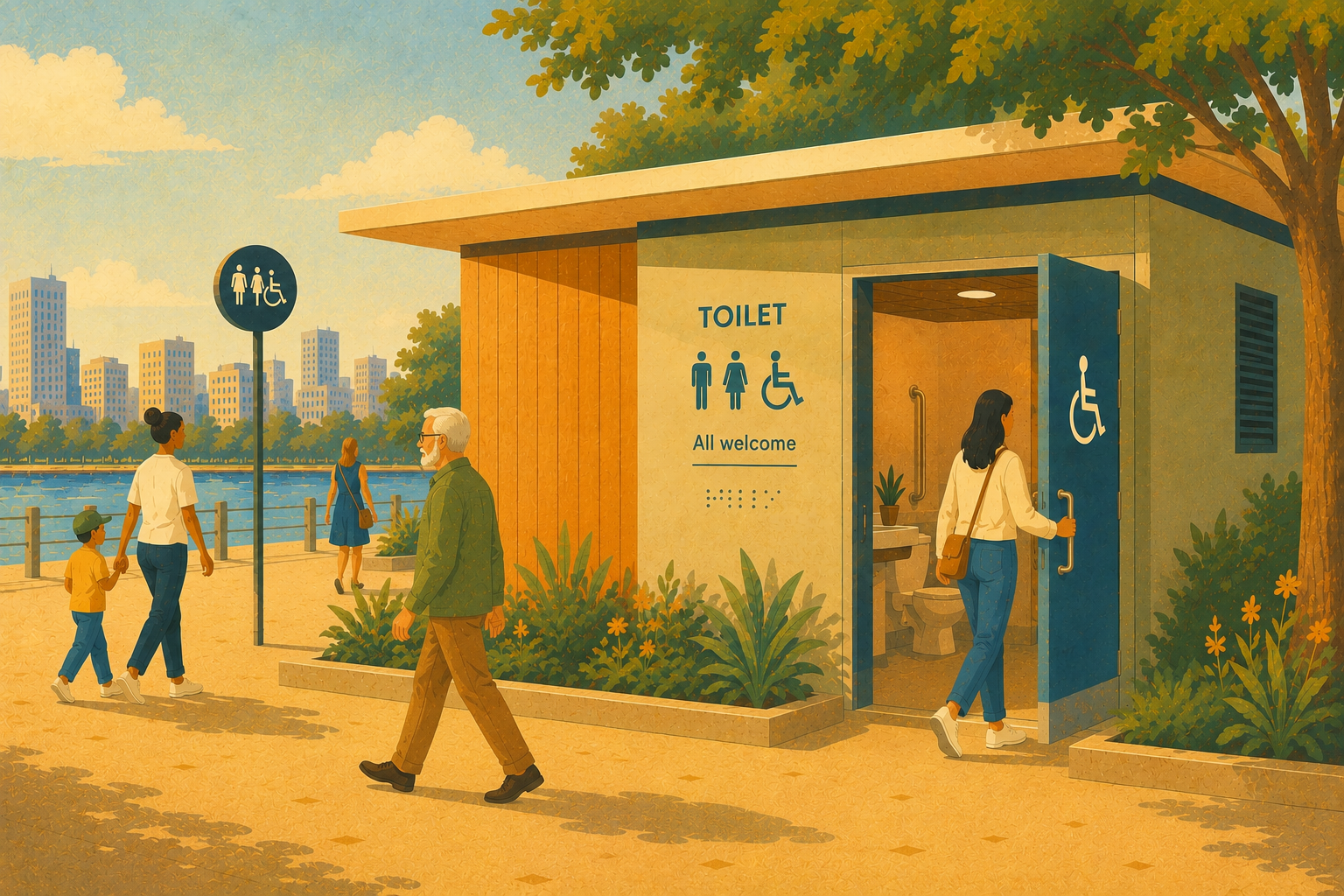

This is a guest article by Karl Dickinson from CityChangers – thank you, Karl! You can see the original here: https://citychangers.org/midcoast-public-toilets-strategy/
Australia is a world leader in public toilet provision.
It may be a vast country, but its 23,000 public conveniences means that there’s the equivalent of one for every 1,200 people, even available in remote areas.
Compare that to data from the UK, where a single public toilet serves 15,481 people in England, 8,500 in Scotland, and 6,748 in Wales. Mainland Europe isn’t doing much better. Brussels only has a single public lavatory per every 20,000 citizens. Paris offers just 400 to a population of more than 2 million, and in the United States, Mayor Zohran Mamdani began his tenure in 2026 by announcing plans to improve its tally of just one public toilet for every 8,500 New Yorkers. Although stats are hard to come by for other regions, it’s fair to say that places where open defecation is commonplace, access to these amenities is even worse.
Yet, about a three-hour drive north of Sydney on Australia’s east coast, MidCoast Council maintains 106 public toilets, which is roughly one per 900 residents – well above the national average.
It is such an impressive figure that Neal Ames, a recreation and open space planner employed by the council, believes it to be a “benchmark for the rest of the world”.
Defining Public Toilets
As well as easy to come by, every single one of Australia’s public toilets is free to use and may be the most diverse range of public loos on offer. Aside from dunnies in urban parks, shower blocks at the beach, or drop toilets in the “bush” – forest or scrubland – Australia’s public toilets can be found in places ranging from a neighbourhood ‘village green’ to a city’s green inner or outer ring.
These are not to be confused with privately managed but publicly accessible facilities, though, such as those found in restaurants and supermarkets, or latrines in train stations, car parks, or even “in libraries or any other community buildings”. Australia’s public toilets are defined as those “owned, maintained, upgraded, enhanced, and cleaned by local government,” Neal explains, which means all of those overseen by MidCoast are in a park or reserve.
Public Inconveniences
Judging by the number of toilets per capita and the MidCoast Public Toilets in Parks Strategy 2025-2035, the council here clearly takes its duty seriously.
Neal moved to the region to develop these strategies after working as a planner at federal, state, and local levels of government around the country for 25 years. Combined, the eight papers contain more than 850 recommendations, including 121 targeted suggestions for maintaining, upgrading, or investing in public toilets.
Like all regional councils in New South Wales, MidCoast operates in an environment of financial constraints; the value of the eight strategies is to guide the future direction of their public assets and to help obtain funding from other levels of government.
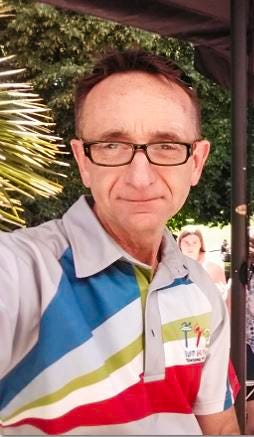
However, by his own admission, Neal is not a toilet expert. He was assigned the task as they fall under his remit as assets located in public open spaces. But at one point, it did come close to an obsession: during a two-month backpacking trip around Europe, our CityChanger couldn’t help making comparisons to home.
In most of the 17 countries he visited, Neal noticed both a lack of public toilets and that there is usually a charge to use the rare finds. He surmised that this is the reason for men seen openly urinating in public in Florence, Italy, and an explanation for the strong smell of urine in the streets of Paris, France – behaviour he often saw elsewhere, too. Locals seemed oblivious, indicating that it’s normalised. “I was shocked,” he says. “We don’t have that experience at all.”
MidCoast Council’s Public Toilets in Parks Strategy
The reason for MidCoast’s success – which the strategy aims to build on – may be pinned on the Aussie outdoor lifestyle.
The regional authority serves about 195 settlements of various sizes spread across 10,000 km2 of urban, farming, mountainous, coastal, and bush area, including 826 parks and reserves. These contain what Neal calls “attractors” – places of sport and recreation, relaxation, commerce, and natural beauty.
Like many Australians, he is keen to preserve these often pristine landscapes – among the country’s most precious assets.
“That’s a big thing in Australia. We protect our natural environment. We really value it, and toilets are one way to make sure that we protect it. It’s a strategy.”
This comes with a condition: expectation.
Demand & Supply
“Australians are spoiled for public toilets,” Neal explains. “Because you get used to what you’ve got, they want to be able to access them everywhere.” Fortunately, decision-makers strive to meet that demand, even when funding is tight.
In MidCoast, that expectation is higher than in most of the country’s 520+ councils. Elsewhere, people choose to live close to work or affordable housing options, Neal tells us, but MidCoast has additional attractors. “We’re delivering a lifestyle,” he says – surfing, sailing, swimming, hiking, fishing, etc. As stated in the strategy, “the provision of high-quality public amenity is important to their enjoyment”.
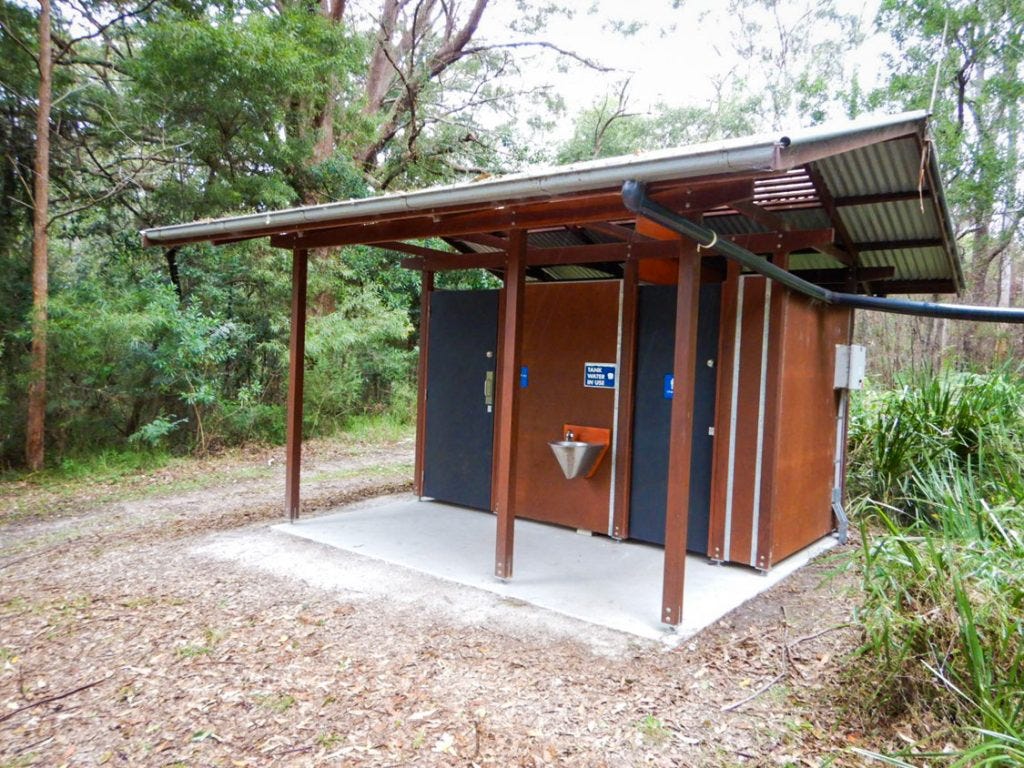
That’s why even MidCoast’s remoter locations are served by a dozen “what we call colloquially drop toilets,” Neal explains. Effectively a deep-dug hole beneath a single cubicle, these retain waste where it’s not possible to run a sewer or maintain a septic tank. “Most of them are next to rivers” or on islands in the regions’ great lakes, and other places people choose to enjoy day trips or camp, preventing human contamination of environmentally sensitive UNESCO-listed waterways.
“The toilets mean that we’re able to do what we’re supposed to do, and that’s to be good custodians of our natural environment.”
Why Public Toilets Matter
There are also social reasons why authorities should make public toilet provision an infrastructure mainstay.
Most obviously, there can be medical side effects of not having access to a restroom when we need to go, causing pain and infections. Toilet and shower facilities are also essential infrastructure for unhoused people, as well as a means “to maintain their dignity” and wellbeing, Neal points out.
“When you provide facilities that your community benefits from, you are creating social cohesion. And then you have fewer problems.”
For others, the prospect of being unable to find a latrine in a hurry can be a cause of such anxiety that it prevents them from enjoying what the region has to offer. “In Australia, we’ve found that public toilets are often the first thing that many in our communities consider before they go to a park,” Neal explains. “It is a limiting factor” with economic consequences too, curbing footfall to local businesses.
Public toilet provision is known to be a gendered issue: women and girls who are menstruating, pregnant, or caring for small children are more likely to venture to a park if reassured that there will be sufficient toilet, feminine waste, and changing facilities available.
And men who use sanitary products are often overlooked. Through community consultation for the strategy, MidCoast was made aware of the need for receptacles for used incontinence products for men. Based on demand, these have been added to some male public toilets, which are clearly marked by a sticker on the door.
Design & Practicality
As this shows, providing a public toilet is just one part of the puzzle.
Anyone who has entered one daubed with graffiti, tiptoed through dubious puddles, or strained a muscle to avoid touching the loo seat will appreciate the difference a well maintained toilet can make. Japan has taken this idea to the next level: each of the Tokyo Toilet Project‘s 17 designs are unique and so visually enjoyable that they aim to change the perception of public toilets from unpleasant and unhygienic necessities to structures of civic pride.
New Zealand was ahead of the game in 1999, when Hundertwasser revamped a toilet block in Kawakawa. Sydney has got in on the act too, with an inviting example of a refurbishment at Darling Harbour.
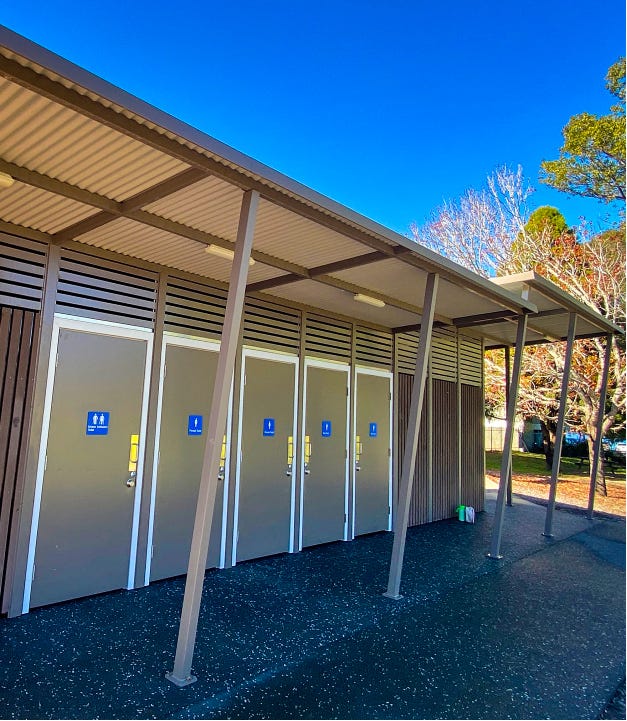
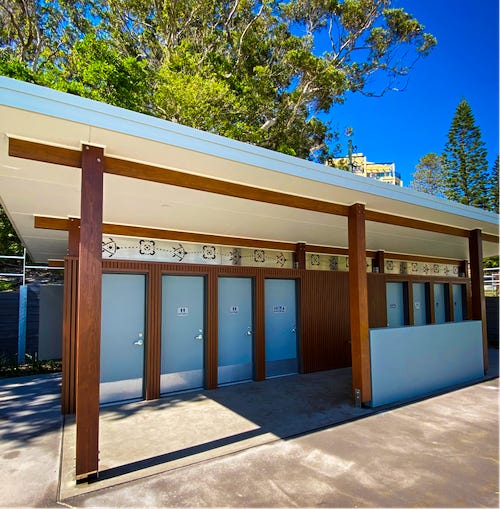
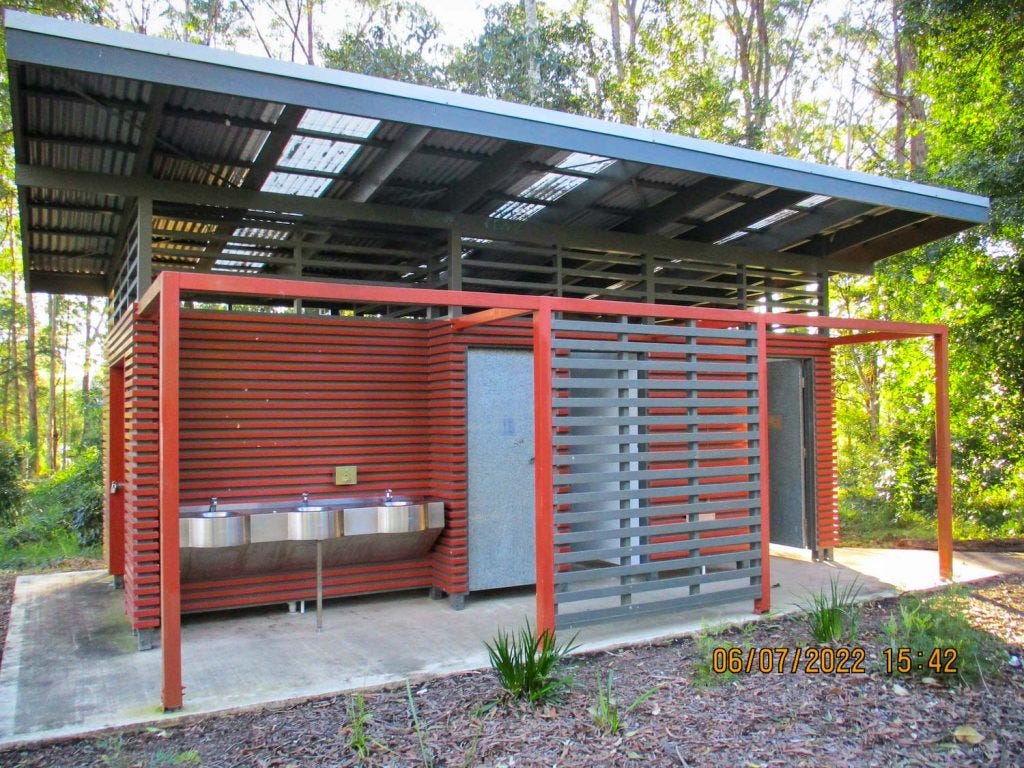
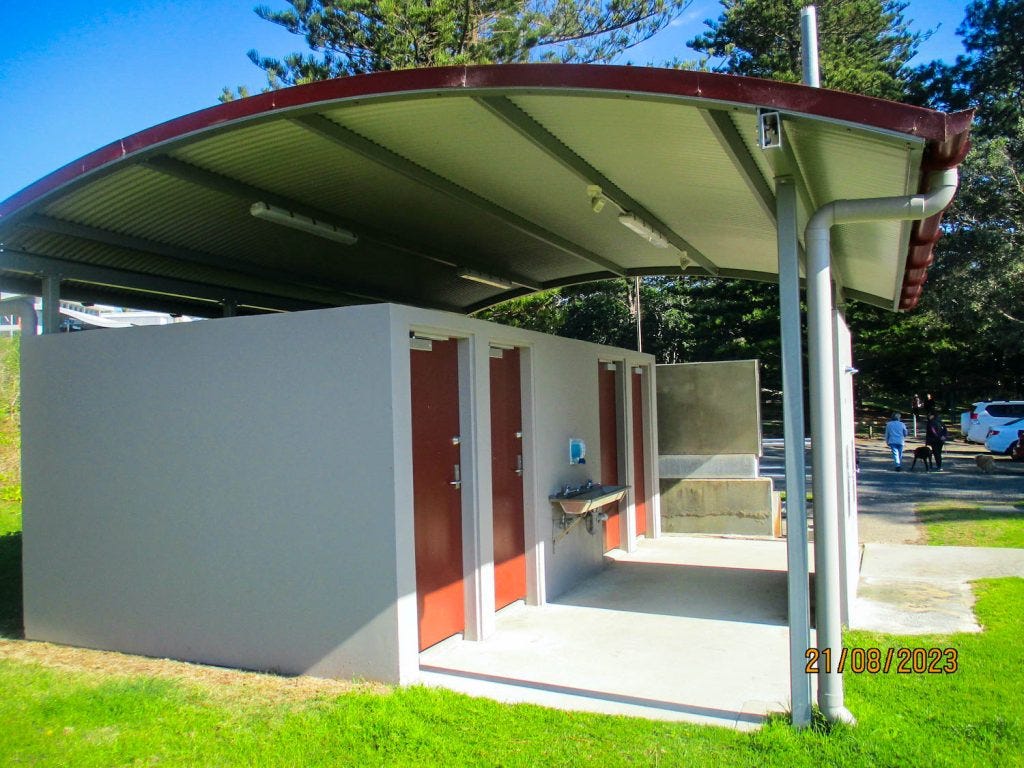
MidCoast Council stopped short of anything so fancy, but they have been rolling out two new, “artistically innovative and forward thinking” designs suitable for populous and bush locations.
“They’re beautiful structures,” Neal says, “because we believe that you only put beautiful things in your park.”
Politicised Peeing
The new designs are unisex, providing six individual gender-neutral cubicles – without urinals – and a shared external (but covered) hand-wash basin.
In an era when single-sex facilities are being dragged into culture wars, making public toilets accessible equally for men, women, and people who identify as trans or non-binary feels like a step forward. But, according to the strategy, there’s more to it: “Unisex, or gender-neutral toilets support families and social inclusion.”
Compared to smaller, gender-segregated cubicles, they are designed to benefit parents or carers “needing to accompany a child of the opposite sex”, as well as improving the ease of use for senior citizens, children, people with walkers and wheelchairs, or those with limited motor capabilities. “They also have the advantage of making it easier for people with visual impairment, and they help to avoid queues at busy times,” the strategy adds.
This last point is backed up by emerging research from queueing theorists at Ghent University in Belgium. They have determined that a shift to gender-neutral loos reduces women’s average wait times by 63%, more in line with men’s experiences – known as “pee parity”.
Listening to the Critics
But the enhanced, gender-neutral cubicles don’t get everyone’s approval.
Before signing off on the strategy, its 121 proposed actions were put to the public through a community consultation process. They received feedback about women feeling uncomfortable knowing that there could be a man in the next cubicle. For a while, it stopped the council contemplating whether it was doing the right thing, Neal recalls.
In the end, this didn’t stop plans for the unisex toilets, but they did amend the strategy to acknowledge the concerns. MidCoast will now consider providing some additional sex-segregated cubicles “on a case-by-case basis”.
Justifying the Cost of Public Toilets
Upgrading and the upkeep of MidCoast’s 106 amenities doesn’t come cheap and the strategy is a budgetary burden that locks the council into its commitments beyond 2035.
While plenty of authorities – like those Neal toured in Europe – slash this provision to help balance stretched budgets, Australian authorities persist. It’s an admirable feat given how councils like MidCoast are managing facilities over such large areas.
Island toilet tanks need to be pumped out. Restrooms in parks should be cleaned. Changing rooms located at surf beaches must be replaced regularly because salty air is corrosive. “The problem for us is the added challenges these coastal environments present as they rust more quickly and need more regular maintenance,” the CityChanger tells us.
Yet, maintain them they do, because investing in attractive, clean, and practical public toilets is an integral part of the public enjoying their cities and nature. This encourages authorities to find space for these essential facilities in their budgets.
The National Public Toilet Map
There’s one more point that Australia seems to do better than most other countries: telling people where to find their toilets. It’s possible via the user-friendly, government sponsored National Public Toilet Map.
MidCoast’s strategy document recommends people refer to it for information about “location, accessibility details, opening hours and features like sharps disposal and showers”. The council, like others, ensures they feed the developers with up-to-date information every time there’s a change to any of the local facilities.
“Older people love the app. People in wheelchairs love the app. The people that know about the app are the people that really need the app.”
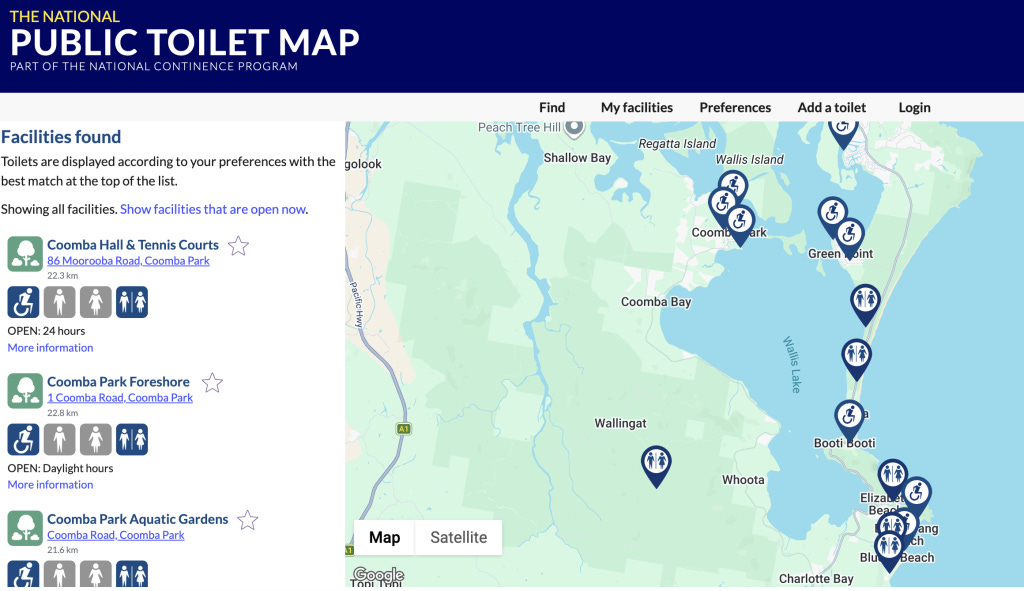
Through personal experience, Neal realises how helpful this can be. As an avid runner, he’s often in unfamiliar parts of cities that lack wayfinding signs. The app always presents the nearest option, which is not always obvious – like one he used in Sydney, which was dug into a cliff, hidden behind a café.
“It saved me a few times and I imagine it saves thousands of people.”
Neal may be pleased to learn that Europe seems to be following suit; like Vienna, Paris has introduced its own toilet map, helping people locate the gradually rising number of modern, self-cleaning units on offer. But as a whole the continent has a long way to go to catch up with the Antipodean trendsetter. At least, for other councils taking their responsibility for public conveniences seriously, MidCoast’s public toilet strategy offers a decent framework to set them on their way.