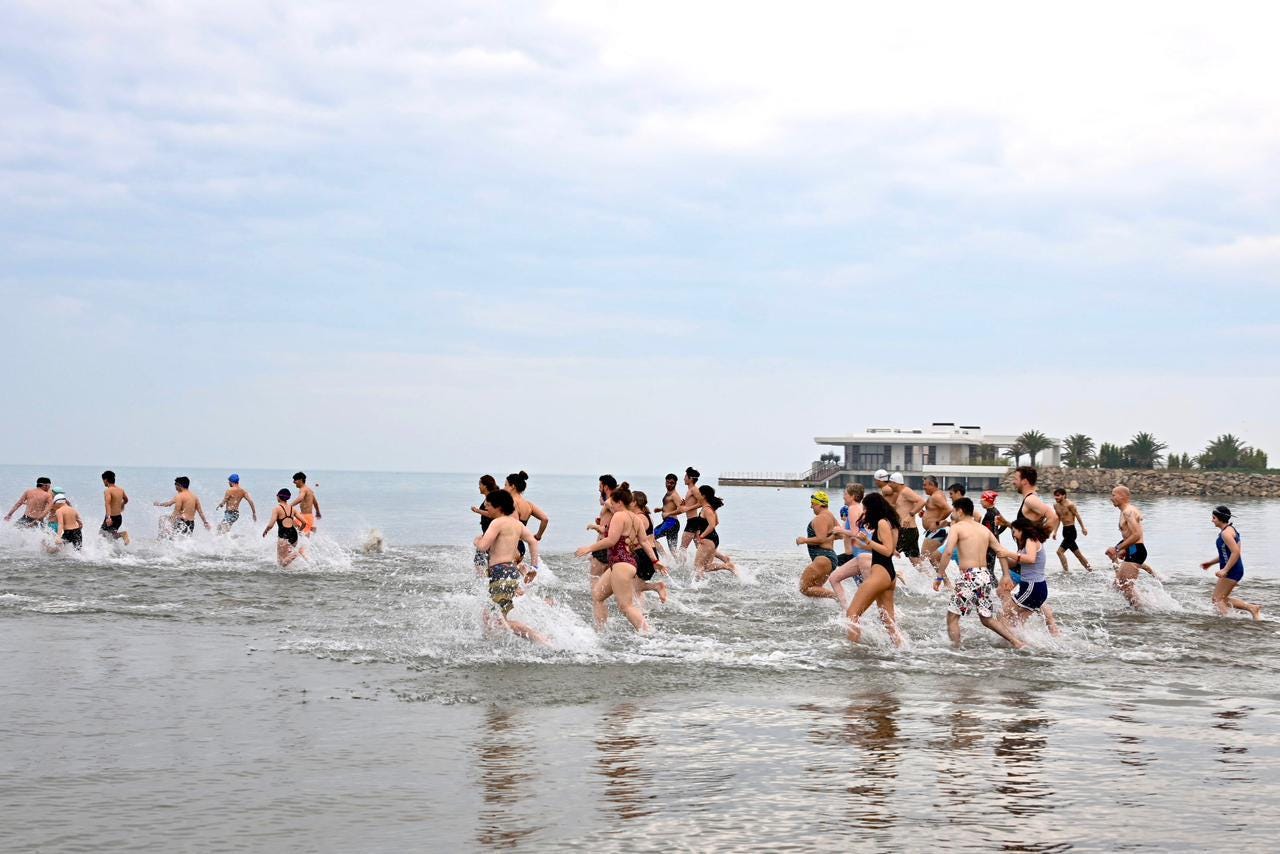
It is a grey and drizzly morning by the Caspian Sea. About 100 people are gathered in a circle on the beach by the half-finished Sea Breeze resort on Azerbaijan’s Absheron peninsula. Just twelve hours ago, we were all in our business clothes, discussing housing as the most important urban challenge. Now, we are shivering slightly in our swim wear, wrapped in towels while a DJ pumps pop music into the air that vaguely smells of oil.
Swimmable Cities, together with Azerbaijan’s Ministry of Sports and Culture, has organised this morning dip as part of the SPLASH swim series. Once the ministry’s professional swimmers have stretched, once everyone has symbolically put some sand into one of ten jars representing the organisation’s foundational values, and once the drones are in position, we do indeed make a splash, running into the water.
The last days have been intense, sharing housing solutions for better cities worldwide. The Baku Call to Action sums up the agreements of the conference – no mean feat, considering that in the end, there were over 50,000 of us. Let’s look at a few examples of what better housing can look like.
Examples of inclusive, safe, resilient, and sustainable housing
Of course, no city has solved the housing challenge. A few cities that are doing remarkable well are Vienna with its massive subsidised housing sector, Tokyo with its highly centralised, market-driven supply, and Singapore, where the majority of residents live in high-quality subsidised public flats which the government keeps affordable.
The WUF was full of other approaches that shone new light on what SDG 11’s call for inclusive, safe, resilient, and sustainable housing can look like in practice. Here are some of my favourites:
- International city partnerships, for example between Hannover in Germany and Mykolaiv in Ukraine, can support urban resilience and recovery after conflict. Hannover is sharing its expertise on public social housing, enabling Mykolaiv to quickly build more housing stock that is urgently required by Internally Displaced Persons (IDPs) and will also serve Ukrainians returning after the war.
- In Malaysia, the URBANICE think tank supports the government in providing at least 10% affordable housing for any new development. It centralises different agencies and regulations, advises on non-formal housing and climate refugees from coastal zones, and supports residents with housing loans, aiming for rent-to-own schemes.
- Caribbean cities have a focus on providing housing after environmental disasters as well as ensuring a safer housing stock for future shocks. In Dominica, the government has implemented a large-scale resilient public housing project, constructing hundreds of climate-fortified homes. Nature-based solutions are key in Saint Lucia’s green affordable housing scheme, while in Trinidad and Tobago, cities focus on in-situ infrastructure improvements, tenure regularisation, and housing subsidies for low-income and female-headed households.
- Upgrading informal settlements, which often starts with granting land rights, is a particularly pressing concern for one billion people worldwide. In South Africa, a housing and land rights programme provides citizens with subsidised homes, tenure security, and land restitution, which includes free houses, formal title deeds, and communal land rights designed to address historical dispossession and poverty.
- Delegates agreed that affordable, resilient, and sustainable housing can take many different shapes and forms. It does not always have to be new: upcycled, modular, or prefabricated materials offer a lot of potential and can quickly create new or better housing, for example in this retrofitting project in Ontario.
- Inclusive housing means planning with, rather than for, the population. There were many calls at WUF to include indigenous people, women, children, and people with disabilities in housing solutions. And sometimes, it’s about providing houses to those who are experiencing homelessness. The NGO Depaul is working with its partners on finding solutions for families living on the street in the Philippines, for example.
Lessons from Baku
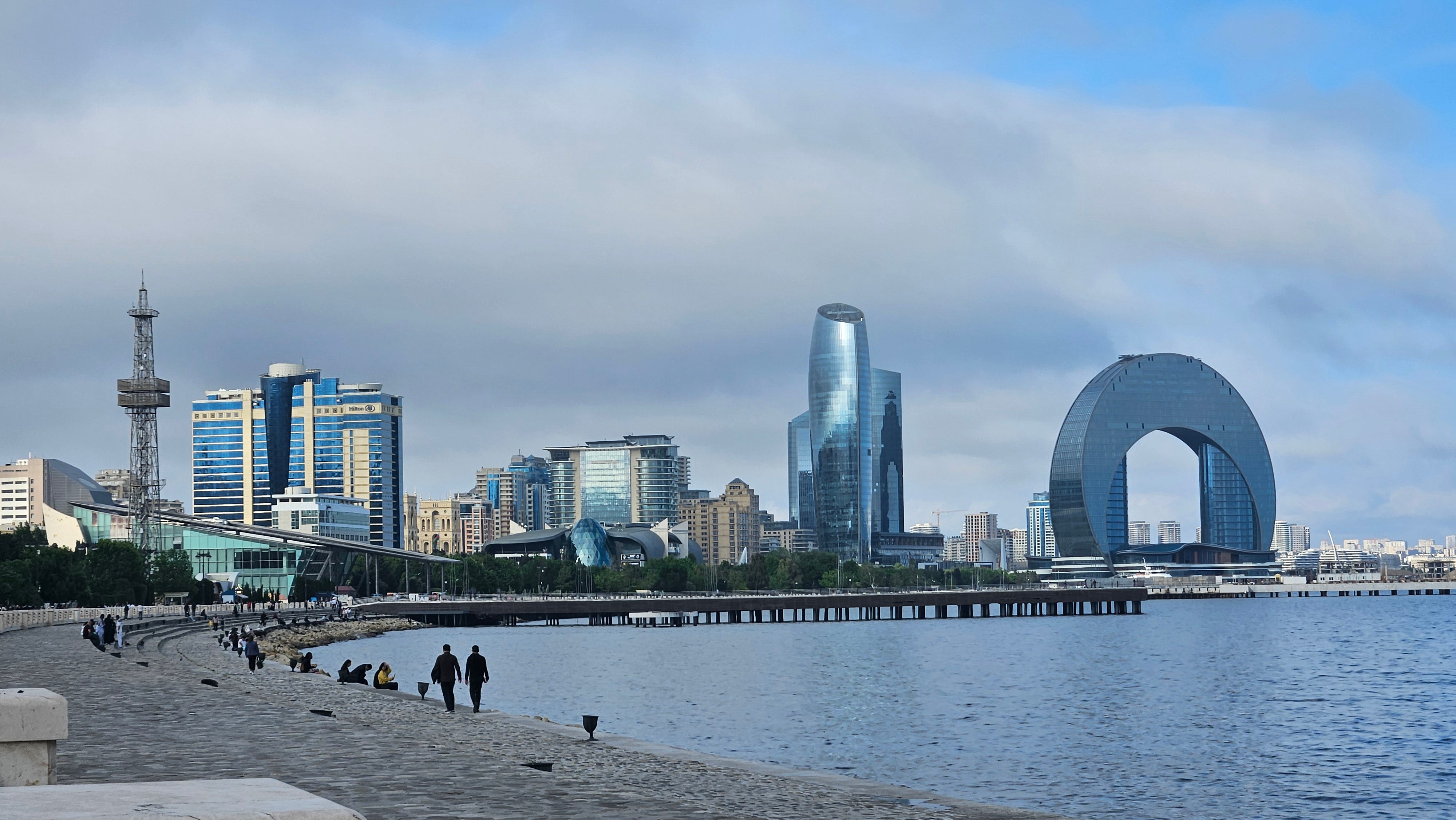
At any World Urban Forum, I like to focus on the host city to understand what we might be able to learn from it. I have attended WUFs in cities as different as Quito, Abu Dhabi, Katowice, and Cairo. Baku has been a gracious and generous host, and it was quite easy to get around with the WUF shuttles and the Metro. WUF13 was present throughout the city, even advertised on the famous Flame Towers every night.
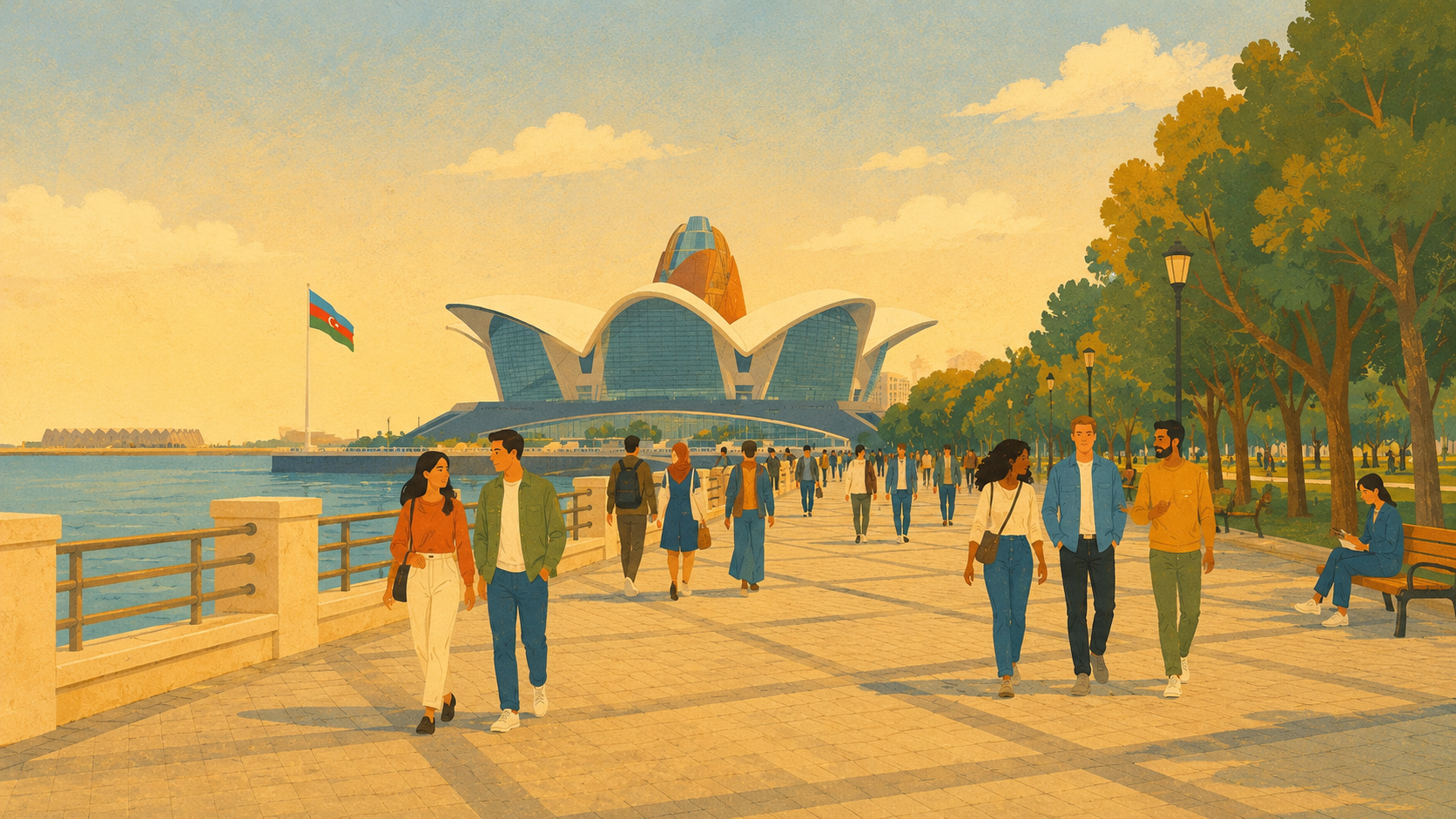
What can we take away from Baku? Personally, my favourite urban project is the Boulevard, a 17 km-long stretch along the Caspian Sea that will be fully connected to areas like the White City by 2030, reaching around 25 kilometres in length. This floodable, accessible walkway makes for a very pleasant evening. Young people jamming and singing on the stairs, couples taking selfies, families buying popcorn, old people resting on the benches under the trees – this works as an urban space because it serves everyone.
Given the WUF’s theme of affordable housing, Baku did not have a particular answer. Like many post-Soviet countries, Azerbaijan struggles with a housing market that was suddenly and completely privatised. There is now a social, affordable housing programme called MIDA providing favourable rates to low-income demographics and young families, but applicants must fall into strict categories such as veterans or reserve military personnel, public sector employees, PhD holders, IDPs, and recognised athletes. These requirements mean that the programme is not a general affordable housing policy in any meaningful sense.
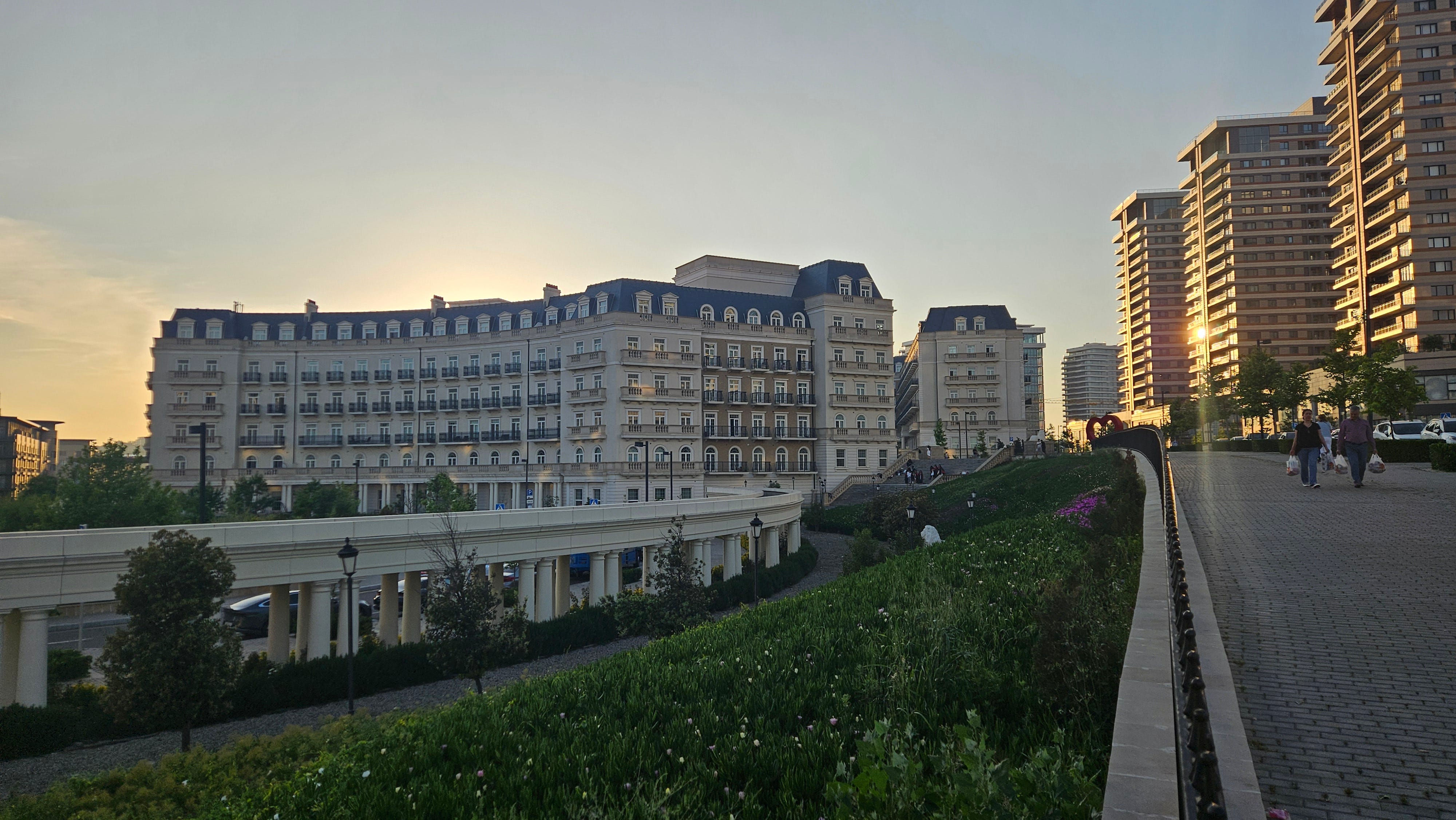
The flagship development is the White City in central Baku, which was where the oil boom started over 100 years ago. This formerly industrial area of Baku was heavily contaminated and nicknamed the “Black City”. In 2000, president Heydar Aliyev announced its transformation to the “White City”. After removing and cleaning soil, construction began in 2011. Nowadays, the White City is already an attractive neighbourhood that resembles London or Paris. It has a metro station and will get four additional ones, there is mixed use, first floor activation, and a big, pleasant park. Heritage preservation plays a big role – but affordability does not. This is clearly for the upper middle and upper class income bands.
This investor-driven style of urban development is present in countless cities all over the world. Contrasted with the housing solutions listed above, it begs the question of how to address housing as a human right, driven by people and their needs.
Housing as a human right
For me, this has been the most practice-oriented WUF I have attended, addressing one of the most pressing concerns in the world. Around three billion people face inadequate housing. “We must place housing at the heart of integrated urban solutions”, Anacláudia Rossbach, UN-Habitat’s Executive Director, said at the conference. Her call to move from dialogue to delivery was heard by the tens of thousands of delegates who exchanged housing solutions. Nga Kor Ming, President of the UN-Habitat Assembly, added an important emotional element:
“Let’s lead with the heart. Humanity is at the core of the housing agenda. We need trust and wisdom to build community. Housing is based on human stories. Let’s ensure that our blueprints lead to legacy.”
A personal highlight for me was hosting the Urban Solutions Journalism Academy at WUF13, training other journalists in how to report about housing solutions and other urban innovations from all over the world. We discussed how we can contribute to better housing and came up with a pitching challenge: Share your stories on sustainable, resilient, inclusive, and affordable housing with the Urban Solutions Journal and I’ll work with you to publish the article.
I’m also curious to hear your impressions from WUF13 and any particularly good housing solutions you have encountered – leave a comment below!