
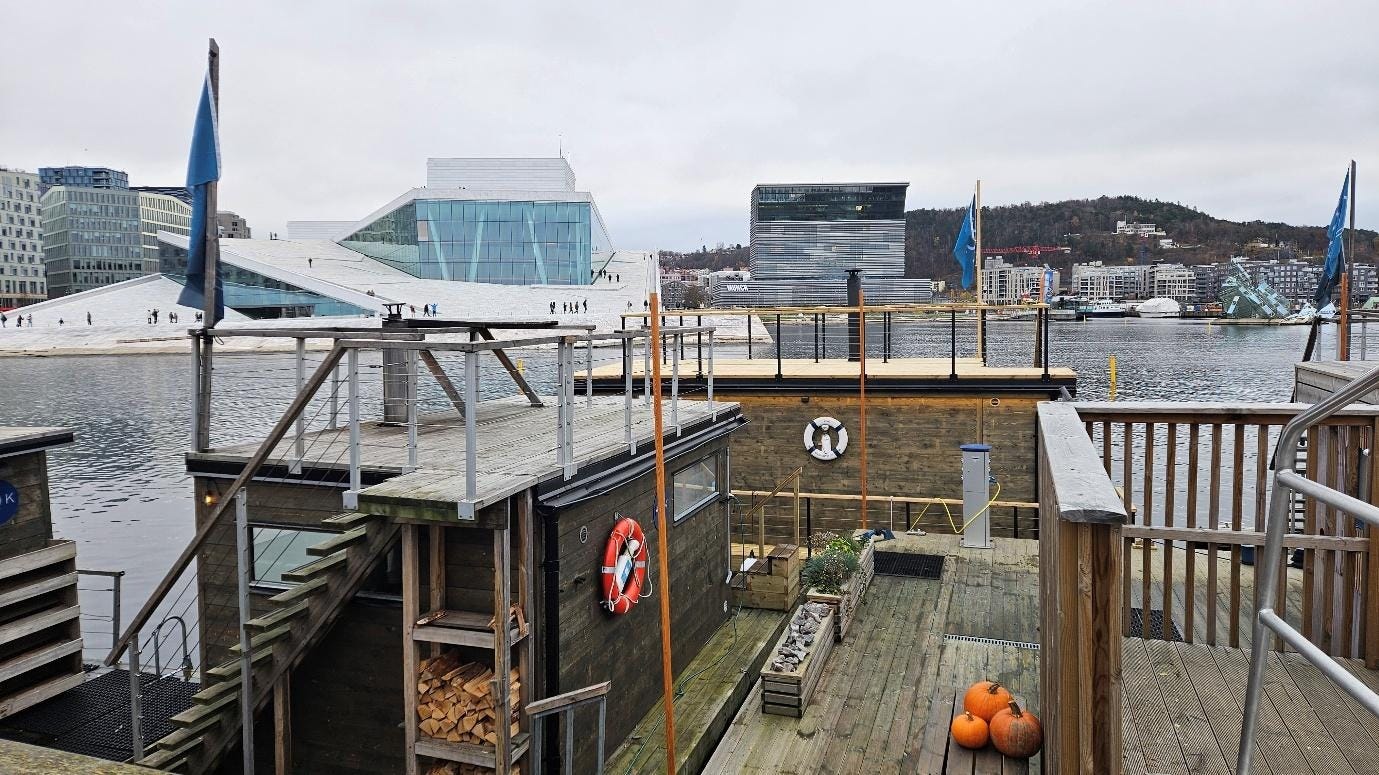
The wooden platform is rocking gently as I step out of the sauna it stands on, steaming against the cold autumn air of Oslo. I take a deep breath, enjoying the temperature transition, and steel myself against the icy water. Mentally, I count to three and then start lowering myself down the steep ladder into the fjord. “Keep breathing, keep breathing” is my mantra as I swim a few lengths before quickly pulling myself back up onto the platform. My skin tingles and I am eager to get into the hot sauna again.
As a Northern German, saunas are a familiar joy to me. Growing up, my neighbours had one and I have fond memories of running out into the snow to cool down in between sauna sessions.
A new kind of third space
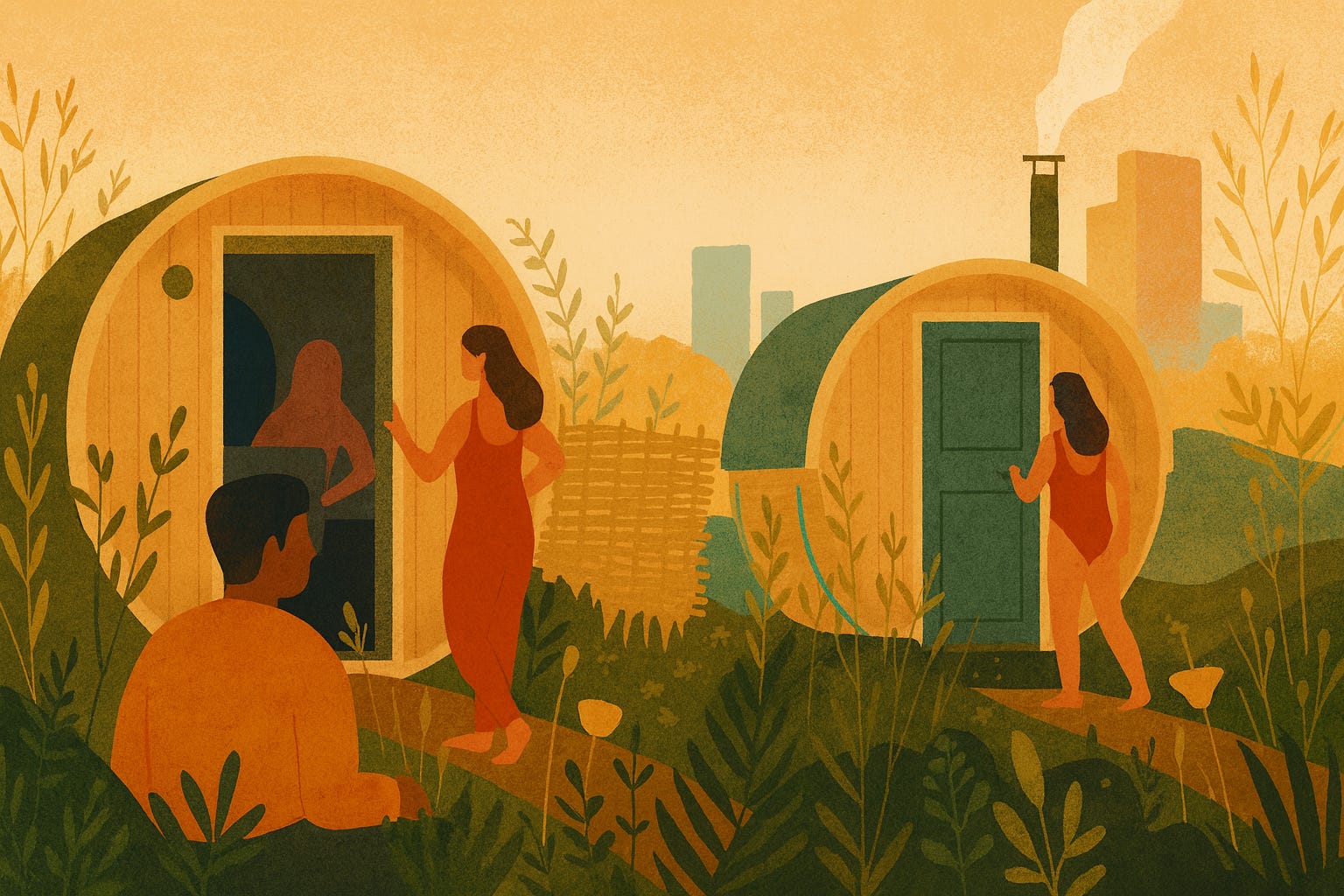
It makes me very happy to see saunas cropping up everywhere now – at least in Northern and Central European countries. Many of these places have long traditions of thermal baths or sauna culture, but unlike in the Nordics, they are not typically seen as community spaces. Community saunas are small, often housed in a wooden barrel or a converted container, usually fitting between two and ten people. Many offer a cold dip afterwards, whether in an ice barrel, the sea, or a lake.
During my visit to Oslo, it became clear that saunas are increasingly functioning as third spaces. The same pattern is emerging in Germany, the UK, and even parts of the US. Have you noticed saunas popping up in your area as well?
A “third space” is a term coined by sociologist Ray Oldenburg to describe the informal gathering places that sit between home and work. These are the cafés, parks, libraries, and community rooms where people meet friends, encounter neighbours, or strike up conversations with strangers. Third spaces are essential for social cohesion because they are accessible, low-pressure environments that help us build the softer ties that make urban life feel connected.
Saunas may seem like an unlikely addition to this list, but they share many of the same qualities. In the context of what many call the “loneliness pandemic,” saunas can help fill an important gap. They appeal particularly to people who are health-conscious or curious about wellness and who may not want to socialise in pubs or bars. Many go with friends, but there is also something powerful about going alone. Once everyone is sitting there in swimsuits, the usual social hierarchies and judgments fall away. You are all slightly uncomfortable, slightly exhilarated, and sharing the same sensory experience. It becomes easy to exchange a few words, share a quick joke, or collectively decide whether to put more water on the hot stones.
These third spaces create a relaxed environment where people naturally drift into conversation, share a moment of quiet, or laugh together about the heat. The combination of ritual, routine, and physical vulnerability makes it surprisingly easy to connect.
The growth of community saunas
The growth of community saunas is remarkable. According to the British Sauna Society, the number of public sauna sites across the UK has increased from around 45 in early 2023 to more than 140 by mid-2025. In London and Scotland, operators such as Community Sauna Baths and Community Sauna Highland now offer low-cost community hours, outreach programmes, and even doctor-referred sessions, positioning saunas as a form of affordable social infrastructure. Sessions typically begin at around £9.50, making them comparable to the cost of two beers in a pub.
Emerging research also suggests that regular sauna use supports cardiovascular health, reduces stress, and improves mental wellbeing. These benefits strengthen the case for saunas as a form of preventative public health. Below, Monika shares about her mobility issues and how coming to the Hackney Wick Sauna has changed her social life:
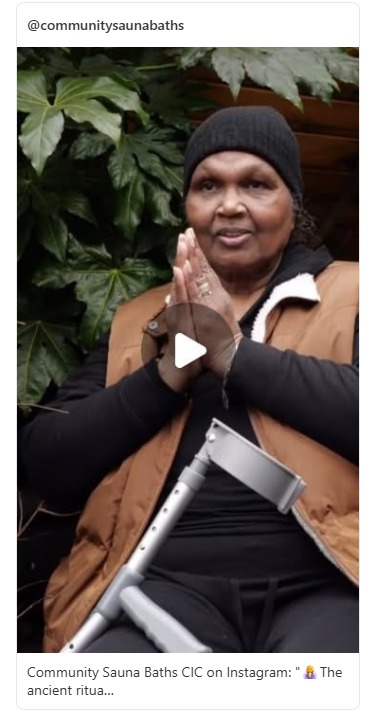
https://www.instagram.com/p/DGFyiMhMiW5
From health trend to accessible community space
Of course, saunas are not free, and this alone means they cannot replace traditional public spaces. Still, community saunas tend to keep prices accessible, and many offer concession rates. The cost is low enough that they remain within reach for a wide range of people.
The experience can be intimidating at first, especially for those unfamiliar with sauna culture. It’s important to pay attention to health briefings and listen to your body. But for most newcomers, the mix of heat and cold becomes enjoyable with a little practice, and the sense of welcome is usually immediate. Regular sauna-goers tend to look out for one another.
Location is another challenge. In London, for example, community saunas are not always easy to reach via public transport. Yet their clustering in East London, often in economically vulnerable areas, makes them accessible to local residents and anchors them in the community in a meaningful way.
In Oslo, I caught a glimpse of what a mature community sauna culture can look like. Saunas have become an everyday part of urban life, used by people before or after work, after stressful days, or simply as a treat. In the colder months especially, they can serve as warm, comforting hubs where social connections are built.
Sauna culture in cities
With their combination of affordability, wellbeing, and social interaction, community saunas can act as valuable third spaces in cities. The addition of cold dips makes them attractive even in warmer climates – something for planners to consider. Often, saunas take over empty spaces as “meanwhile sites”, but they can also become more permanent. Floating saunas offer the additional benefit of changing location easily.
To truly turn these spaces into low-barrier environments, it is key to offer accessible prices, including lower rates. Neighbourhood sessions as well as women-only sessions, for example, can help to further break, down barriers and make saunas attractive across different groups. In winter, their draw increases as many other forms of outdoor social life shut down. This helps explain why they are increasingly recognised not just as wellness spaces, but as emerging third spaces in cities.
If you have a community sauna nearby, give it a try! And if you don’t, I’d be curious to hear if your city has other kinds of third spaces that cater to physical and mental wellbeing in a similar manner – share a comment below!
I’m off to the sauna now. And next time I’m in Oslo, I’ll make sure to go to another floating sauna. If you book a sauna cruise, the wooden platform, complete with a steering wheel and an electric engine, will even take you on a tour around the fjord. Heaven.
This piece was edited by Ely Bakouche from The Lighthouse Library.