
There are garden cities all over the world today, mostly in suburbs. But where does this idea come from, and how did it develop? Can we learn something from the original concept? I took a trip to the first two garden cities recently and found pleasant and affluent towns, smoothed from a radical idea into something more comfortable.
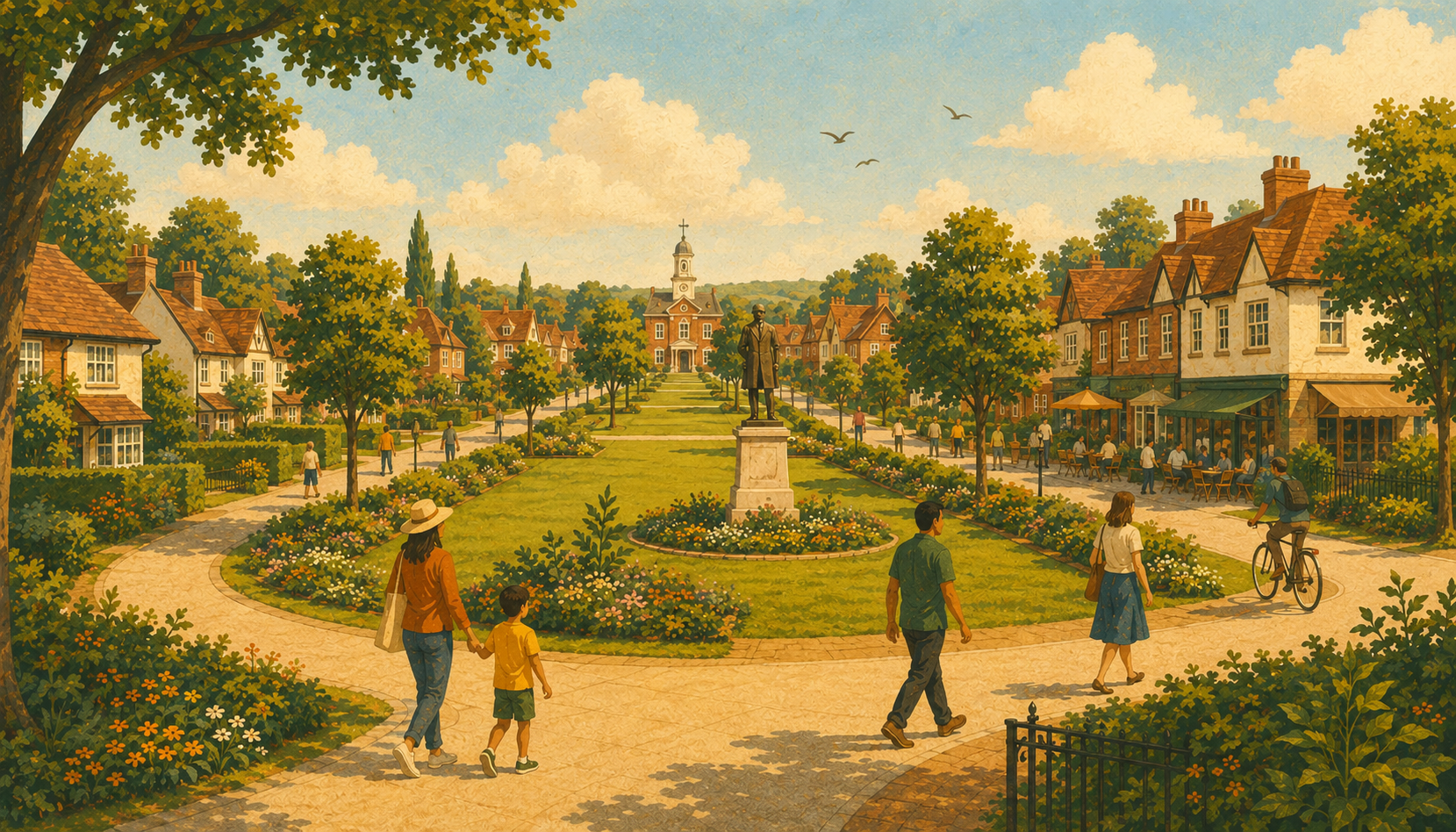
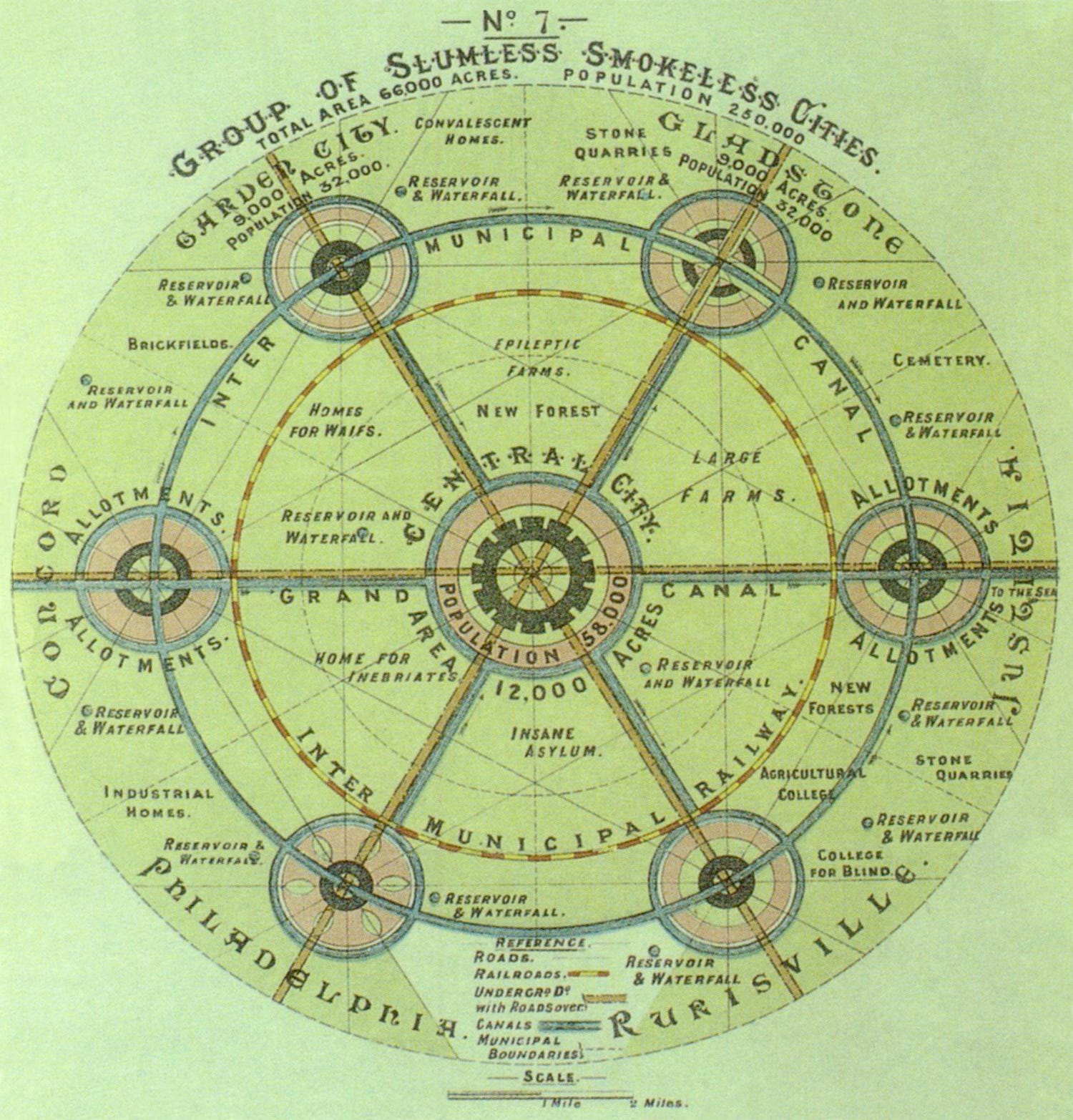
Ebenezer Howard, a British stenographer and social reformer, was an unlikely person to shape the future of urban planning, but he did: He developed his garden cities idea in his book called “To-morrow: A Peaceful Path to Real Reform”, published in 1898. Given the prevailing overcrowding, poverty and pollution in British cities back then, Howard wanted to find a way to combine the best elements of town and country living. In his vision of a garden city, several towns and a centre would be arranged in a circular shape, surrounded by a green belt. Separate land uses would characterise the different towns and through low density, green space and excellent transportation links, life would be made very comfortable and enjoyable.
Most interestingly, Howard envisioned socially mixed neighbourhoods and collective land ownership, a sort of compromise between anarchism, socialism, and liberal capitalism. Even today, this idea sounds radical, which helps explain the ongoing fascination with garden cities.
On the other hand, American-Canadian journalist and author Jane Jacobs criticised garden cities as early as 1961 for being “really very nice towns if you were docile and had no plans of your own and did not mind spending your life among others with no plans of their own. As in all Utopias, the right to have plans of any significance belonged only to the planners in charge”. She criticises the “paternalistic, if not authoritarian” conception of planning inherent in garden cities. Even today, the Town and Country Planning Association (TCPA) advocates “Planning for People” on its website, instead of “with the people”. So are garden cities utopian ideals?
Visiting Howard’s garden cities
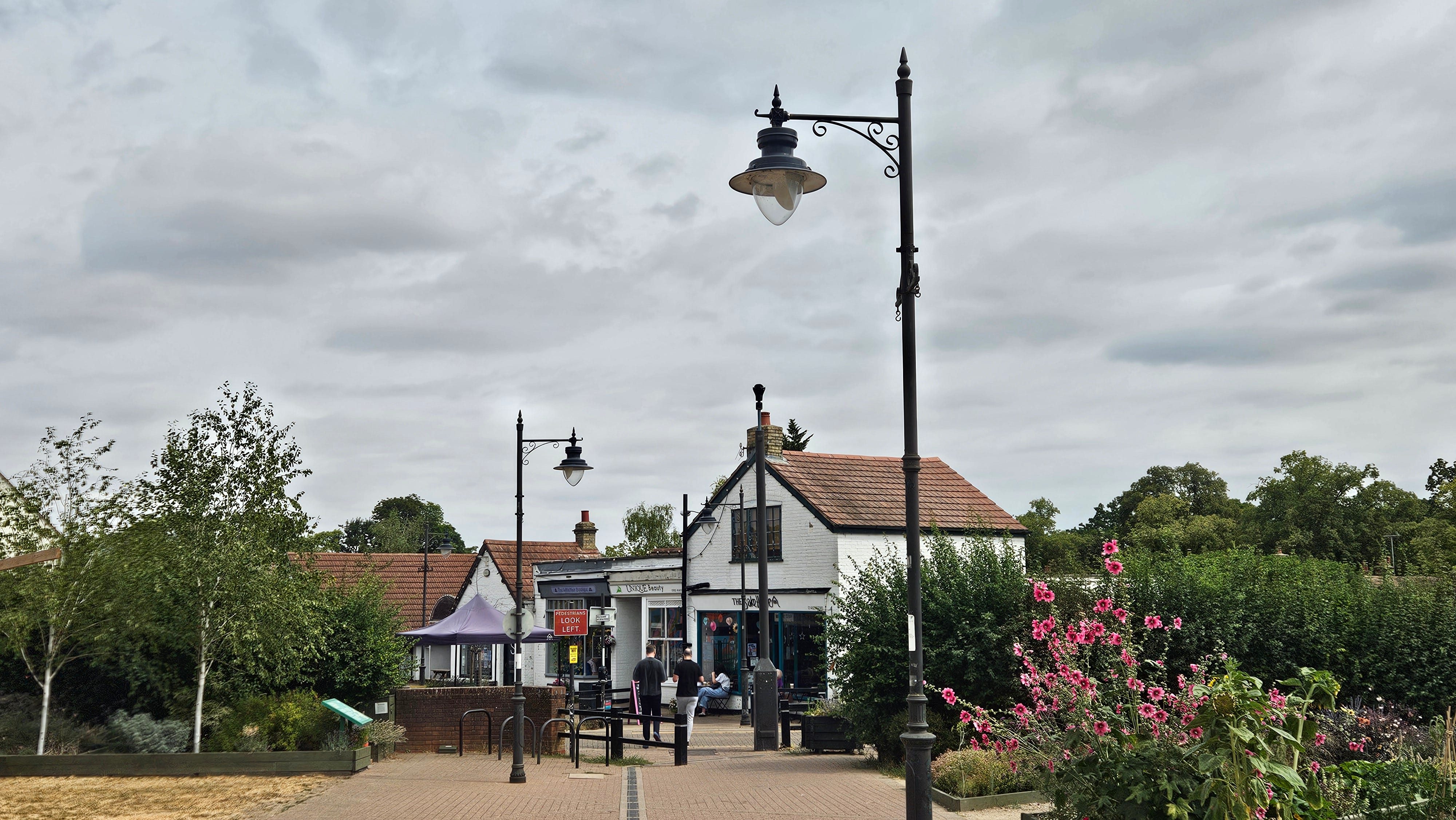
Recently, I went on a day trip to look at the first two garden cities built right here in the UK – Letchworth and Welwyn, a short train ride from London. While they are both very pleasant places to live, I have to say that they are not very exciting. They have central green spaces and pretty houses, but in practice, they seem to act as commuter towns and places to retire, rather than the vibrant and self-contained communities that Howard envisioned. Their proximity to London certainly has to do with that.
My first impression of Letchworth was of a place to retire. Life is certainly very good there if you are living in a retirement home, or even if you catch the train into London every day. But beyond that, the town of roughly 34,000 inhabitants struck me as a sleepy suburb much more than a radical idea with a new social order, as envisioned by Howard.
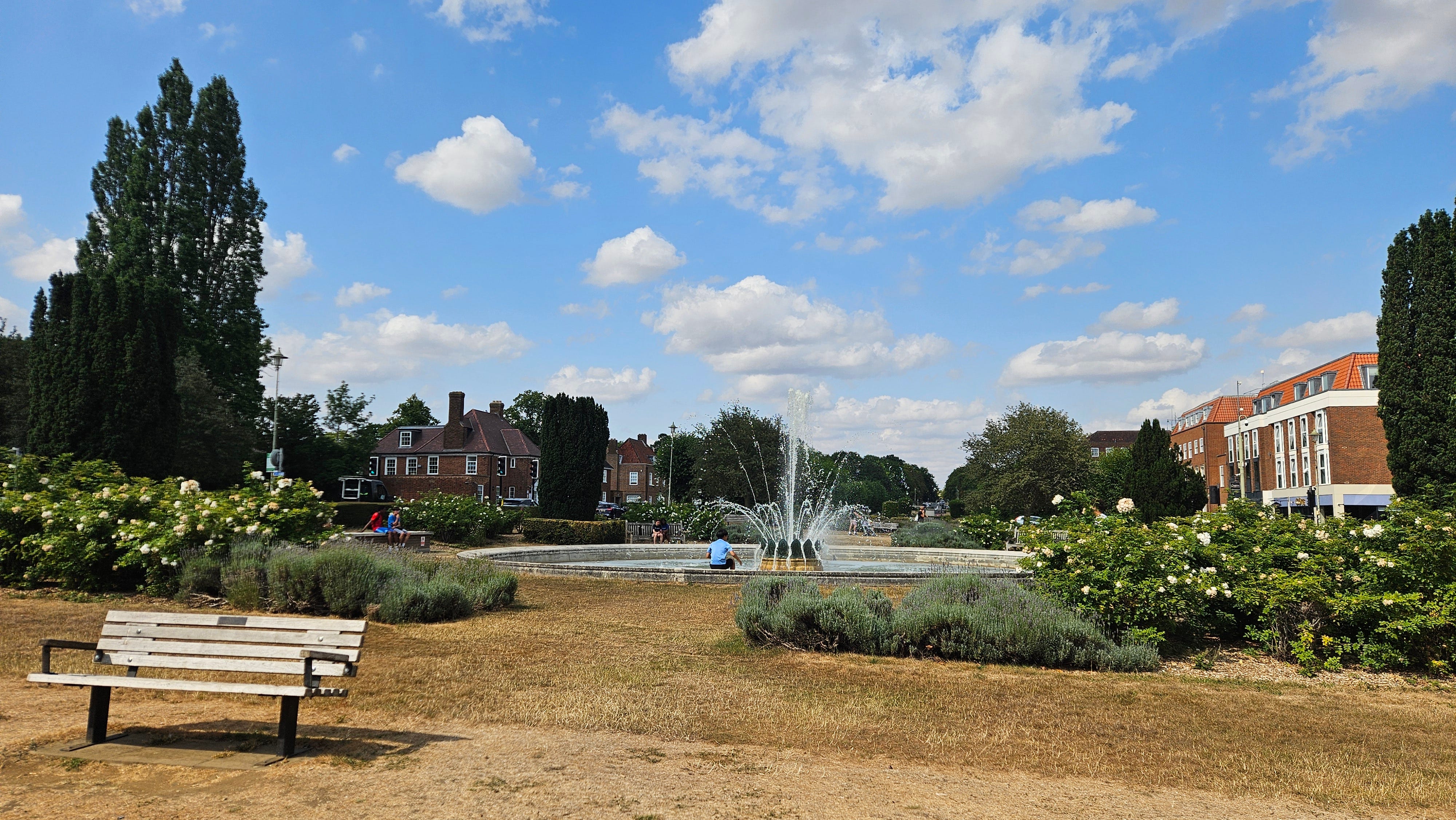
In Welwyn Garden City, which is bigger than Letchworth, the garden city idea is even more pronounced in the town centre. Coming out of the station (and the shopping centre it is weirdly connected to), you look down one of its radial park axes right at a statue of Ebenezer Howard. This very wide boulevard has some shops and cafés to each side, and it certainly puts pedestrians at its heart. Perpendicular to it, there is another, almost 1,000 metre long axis that is also mostly green. Cars were slowly edging around the green space and residents were enjoying the park. But still, it seems that the utopian vision is mostly reduced to large linear parks and the statue of its founder.
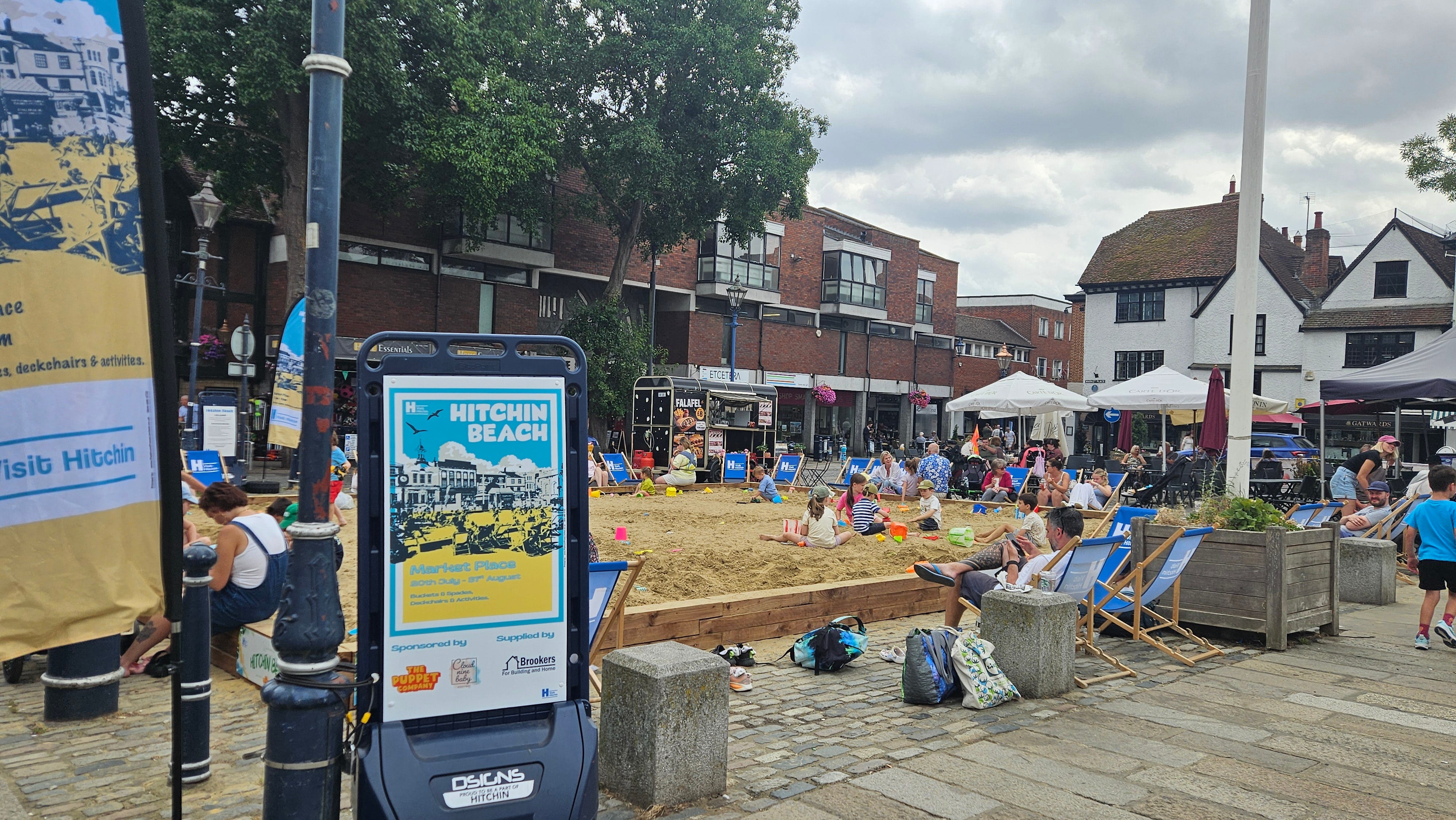
In between visiting these two cities, I also stopped off at Hitchin, a lively market town on the way. And I have to say that it was the most liveable, attractive place out of the three, partly due to its pop-up beach. While it could certainly do with more green spaces, this is a market town that seems vibrant, full of cultural and commercial offers, and more diverse and self-contained than the two garden cities I visited that day. This organically grown town has a vitality that the planned utopias lacked.
Garden cities today
In the United Kingdom and beyond, garden cities remain a powerful idea. Greener cities are omnipresent in urban planning both for climate and for mental health reasons. What I like about Howard’s idea is that he envisioned garden cities as a “radical hope” for more cooperative civilisations, consisting of socially mixed and independent communities, managed in a participatory way with the public interest at heart. However, this is unfortunately very difficult to implement in our capitalist world. Experiences with garden cities over the last century have shown that the element of social inclusiveness is most difficult to achieve, since garden cities have mostly become upmarket suburbs.
The idea still feels exciting, because its spatial and ecological principles of green belts, low density, mixed use and walkability appeal to modern planners. It has found a new life in eco-cities, a globally applicable model that evolved from the garden city ideas. These cities aim to emit zero carbon, to function on renewables, and to reduce poverty. China and India are notable defenders of this idea. Singapore with its resource-efficient, omnipresent green cover and urban gardening is a good example, too.
Ebenezer Howard imagined cities as instruments of social transformation, not just pleasant places to live. The easiest part of his vision – green boulevards, low density, tidy parks – survived. It is also the least threatening to existing power structures. Letchworth and Welwyn are comfortable places, but comfort was never the point of Howard’s utopia. What if we instead looked again at his more radical ideas such as collective land ownership, real social mixing, and communities that can govern and sustain themselves? What kind of imagination does it take to change systems that treat land as an asset rather than a commons? These are inconvenient political questions, but asking them and finding answers would help us to actually plan with people and not just for them.
I’m curious to hear your thoughts: Have you been to a garden city or eco-city, or do you even live in one? What do you think we can learn from them as planners? And what are your thoughts on Ebenezer Howard’s original theory? Leave a comment below!
Announcements
Save the date: On Thursday, September 24, I’ll host the next Urban Solutions Journalism Academy. It will run from 4pm to 5.30 pm UK time and will be free. Sign up here:
I am also excited to announce that the Urban Solutions Journal is an official media partner for ISOCARP’s Women in Planning conference and award, taking place in Glasgow on November 23 and 24. Sign up here.